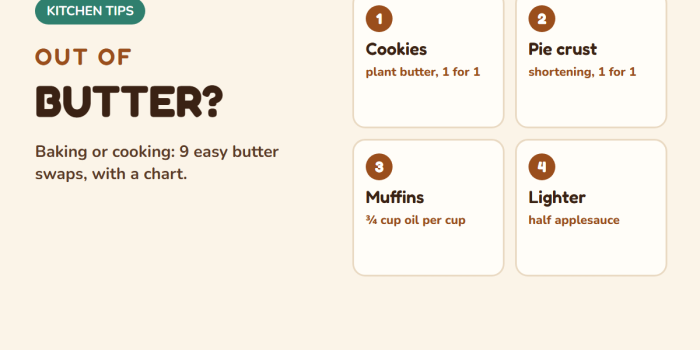
Short answer: for baking, the closest swap is plant-based butter sticks or margarine sticks, cup for cup. For pie crust and biscuits, use shortening or solid coconut oil, cup for cup. For muffins, quick breads and cakes, use ¾ cup vegetable oil for every 1 cup of butter. Cutting fat? Swap up to half the butter for applesauce, mashed banana, Greek yogurt or pumpkin purée.
Below you’ll find a quick chart, then each swap explained: what it works in, what it doesn’t, and how it changes the result.
On this page: The chart · The 9 swaps · Butter swaps for cooking · Thanksgiving baking · Tips before you swap · Quick questions
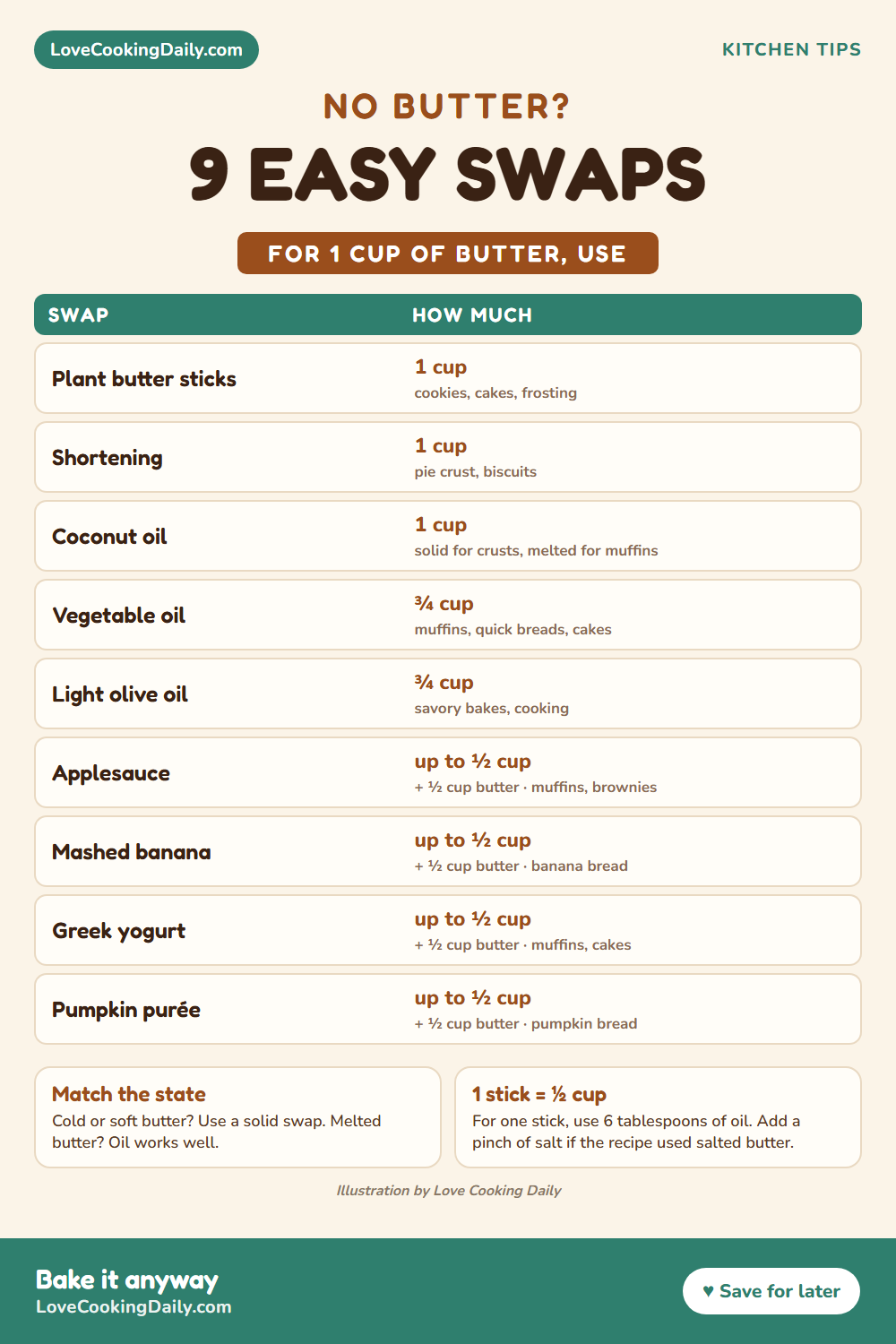
Butter substitute chart: how much to use
| Swap | For 1 cup butter | Best for |
|---|---|---|
| Plant-based butter or margarine sticks | 1 cup | Almost anything: cookies, cakes, frosting |
| Vegetable shortening | 1 cup | Pie crust, biscuits, cookies |
| Coconut oil | 1 cup | Solid for crusts and cookies, melted for muffins |
| Vegetable or canola oil | ¾ cup | Muffins, quick breads, cakes, brownies |
| Light olive oil | ¾ cup | Savory bakes, olive oil cake, cooking |
| Unsweetened applesauce | Up to ½ cup (plus ½ cup butter) | Muffins, spice cakes, brownies |
| Mashed ripe banana | Up to ½ cup (plus ½ cup butter) | Banana bread, muffins, pancakes |
| Plain Greek yogurt | Up to ½ cup (plus ½ cup butter) | Muffins, cakes, quick breads |
| Pumpkin purée | Up to ½ cup (plus ½ cup butter) | Pumpkin bread, spice cakes, brownies |
Good to know: 1 stick of butter is ½ cup, or 8 tablespoons.
The 9 swaps, explained
1. Plant-based butter or margarine sticks (1 for 1)
This is the easiest swap, because these are made to act like butter. Use the same amount. Pick sticks, not soft spreads from a tub: tub spreads carry more water, so cookies spread flat and cakes turn out soft and greasy. Sticks cream with sugar, hold a frosting and bake much like butter. Many plant-based sticks are dairy-free, so check the label if that’s why you’re swapping.
2. Vegetable shortening (1 for 1)
Shortening is all fat and no water, which is why it makes very flaky pie crust and tall, tender biscuits. Use the same amount. Cookies come out puffier and spread less. The one thing it doesn’t bring is flavor, so a pinch of salt and a little extra vanilla in sweet bakes help. Some bakers split it: half shortening for flakiness, half butter for taste.
3. Coconut oil (1 for 1)
Use the same amount, and match its state to the butter in the recipe. Solid coconut oil (chilled, if your kitchen is warm) works like cold butter in pie crust, scones and cookies. Melted coconut oil works where the recipe calls for melted butter, like muffins and brownies. Refined coconut oil tastes neutral; virgin coconut oil tastes of coconut, which is lovely in some bakes and odd in others. Have your other ingredients at room temperature, or melted coconut oil can firm up in clumps.
4. Vegetable or canola oil (¾ cup per cup)
Oil is pure fat, and butter isn’t (it’s about 80% fat, the rest mostly water), so use a little less: ¾ cup oil for 1 cup butter, or 6 tablespoons for a stick. It’s great in recipes that call for melted butter: muffins, quick breads, snack cakes and brownies, which come out moist and stay soft for days. Skip it in recipes where you cream butter and sugar until fluffy, and in pie crust, because oil can’t hold air or make flaky layers.
5. Light olive oil (¾ cup per cup)
Same amount as vegetable oil, and the same rule about creaming. Light (mild) olive oil works in olive oil cakes, savory muffins, cornbread and focaccia. Extra virgin olive oil has a strong, peppery taste, so save it for savory cooking, where it’s a natural swap: roasting, sautéing and drizzling. More on that below.
6. Unsweetened applesauce (up to half)
Keep half the butter and swap the other half for the same amount of applesauce. Your muffins, spice cakes and brownies stay moist, with less fat. Going further than half makes bakes dense, gummy and cakey, and cookies won’t crisp. Unsweetened is best; with sweetened applesauce, you can cut the sugar a little. It also pairs well with fall spices, like our homemade pumpkin pie spice.
7. Mashed ripe banana (up to half)
Works like applesauce: keep half the butter, swap the rest for the same amount of mashed, very ripe banana. Everything will taste of banana, which makes it perfect for banana bread, muffins and pancakes, and a poor fit for vanilla cake. Want a banana bread to start from? Try this moist banana bread.
8. Plain Greek yogurt (up to half)
Keep half the butter and swap the other half for plain Greek yogurt. It adds moisture and a gentle tang, and works well in muffins, quick breads and cakes. Full-fat yogurt gives a richer, softer crumb than nonfat. Out of yogurt too? Sour cream works the same way; see our sour cream substitute chart for more swaps.
9. Pumpkin purée (up to half)
The fall version of applesauce: keep half the butter and swap the other half for plain pumpkin purée (not pumpkin pie filling, which is already sweetened and spiced). It suits pumpkin bread, spice cakes, muffins and brownies, where the color and taste fit right in.
Butter swaps for cooking (not baking)
Cooking is much more forgiving than baking. In most savory dishes, you can swap freely:
- Sautéing and frying: olive oil, vegetable oil or avocado oil, about the same amount. Oil also burns less easily than butter.
- Roasting vegetables: toss them in olive oil instead of melted butter. They’ll brown just as well.
- Mashed potatoes: a good drizzle of olive oil, a spoon of sour cream or cream cheese, or some warm broth. Here’s a recipe to start from: garlic mashed potatoes with sour cream.
- Cream sauces and soups: start the onions in oil, then finish with a splash of cream. No cream either? See our heavy cream substitute chart.
- Gravy: for the roux, use the same amount of fat from the roast drippings, or vegetable oil, in place of butter. If it goes wrong, our how to fix gravy guide has the fixes.
- Toast, popcorn and corn on the cob: olive oil and a pinch of salt.
Thanksgiving baking without enough butter
Butter runs out fast in November. If you’re short on the day, here’s where each swap fits:
- Pie crust: shortening or solid coconut oil, same amount, kept cold. Or go half butter, half shortening to stretch what you have.
- Pumpkin bread and muffins: vegetable oil (¾ cup per cup), or swap up to half the butter for pumpkin purée or applesauce.
- Cookies: plant-based butter sticks, or shortening for a puffier cookie, like these pumpkin spice chocolate chip cookies.
- Sweet potato casserole: melted coconut oil or plant-based butter in the filling and topping. Ideas here: easy ways to cook sweet potatoes.
- Stuffing: olive oil to cook the onions and celery, plus a little more broth. Try this sausage and herb stuffing.
Out of other baking basics too? See what to use instead of eggs, our brown sugar substitute chart and the evaporated milk substitute for pumpkin pie.
Tips before you swap
- Match the state. If the recipe says cold or softened butter, pick a swap that’s solid (sticks, shortening, solid coconut oil). If it says melted butter, oil works well.
- Add a pinch of salt. If the recipe uses salted butter and your swap has no salt, add a small pinch so it doesn’t taste flat.
- Expect a softer, moister crumb with oil or fruit swaps, and less browning on top. Check for doneness with a toothpick a few minutes early.
- Swap one thing at a time. Replacing butter, eggs and sugar in the same bake makes it hard to know what went wrong.
- Some recipes are all about the butter. Shortbread, butter cookies, croissants and buttercream rely on butter’s taste. Use plant-based butter sticks there, or save the recipe for another day.
Quick questions
What can I use instead of butter in baking?
Plant-based butter or margarine sticks (same amount) are the closest. Shortening or solid coconut oil (same amount) work for crusts and biscuits, and ¾ cup oil per cup of butter works for muffins, quick breads and cakes.
How much oil replaces 1 cup of butter?
Use ¾ cup of vegetable, canola or light olive oil for 1 cup of butter. For one stick (½ cup), use 6 tablespoons of oil.
Can I use oil instead of butter in cookies?
Not easily. Most cookie recipes cream solid butter with sugar, and oil can’t do that, so the cookies come out flat and greasy. Use plant-based butter sticks, shortening or solid coconut oil instead, or look for a recipe written for oil.
What is the healthiest substitute for butter in baking?
Unsweetened applesauce, mashed banana, plain Greek yogurt or pumpkin purée cut the most fat. Swap up to half the butter for the same amount, and keep the rest as butter or oil so the bake stays tender.
Can I use margarine instead of butter?
Yes, cup for cup, as long as it’s stick margarine. Soft tub spreads have more water and can make cookies spread and cakes greasy.
Kitchen Kit
- A set of measuring cups and spoons, for the ¾-cup oil swap
- A pastry blender, to cut shortening or cold coconut oil into pie crust
- A silicone spatula set, to scrape every bit of applesauce or yogurt into the batter
As an Amazon Associate I earn from qualifying purchases.