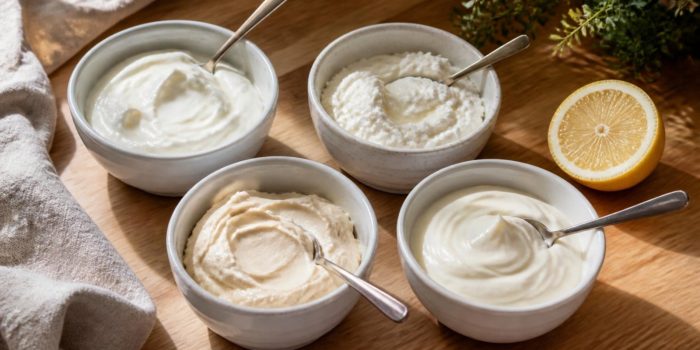
Short answer: the best all-round sour cream substitute is plain whole-milk Greek yogurt, swapped cup for cup. It has the same tang and thickness, and it works in dips, dressings, baking and on top of a baked potato. Out of yogurt too? Crème fraîche, blended cottage cheese, softened cream cheese and even mayonnaise will each do the job in the right dish, and there’s a dairy-free version made with cashews.
Below you’ll find a quick chart, then each swap explained, then which one to use in mashed potatoes, baking, sauces, dips and tacos.
On this page: The chart · What sour cream does in a recipe · The 9 swaps · Recipe by recipe · Cooking with it hot · Mistakes to avoid · Quick questions
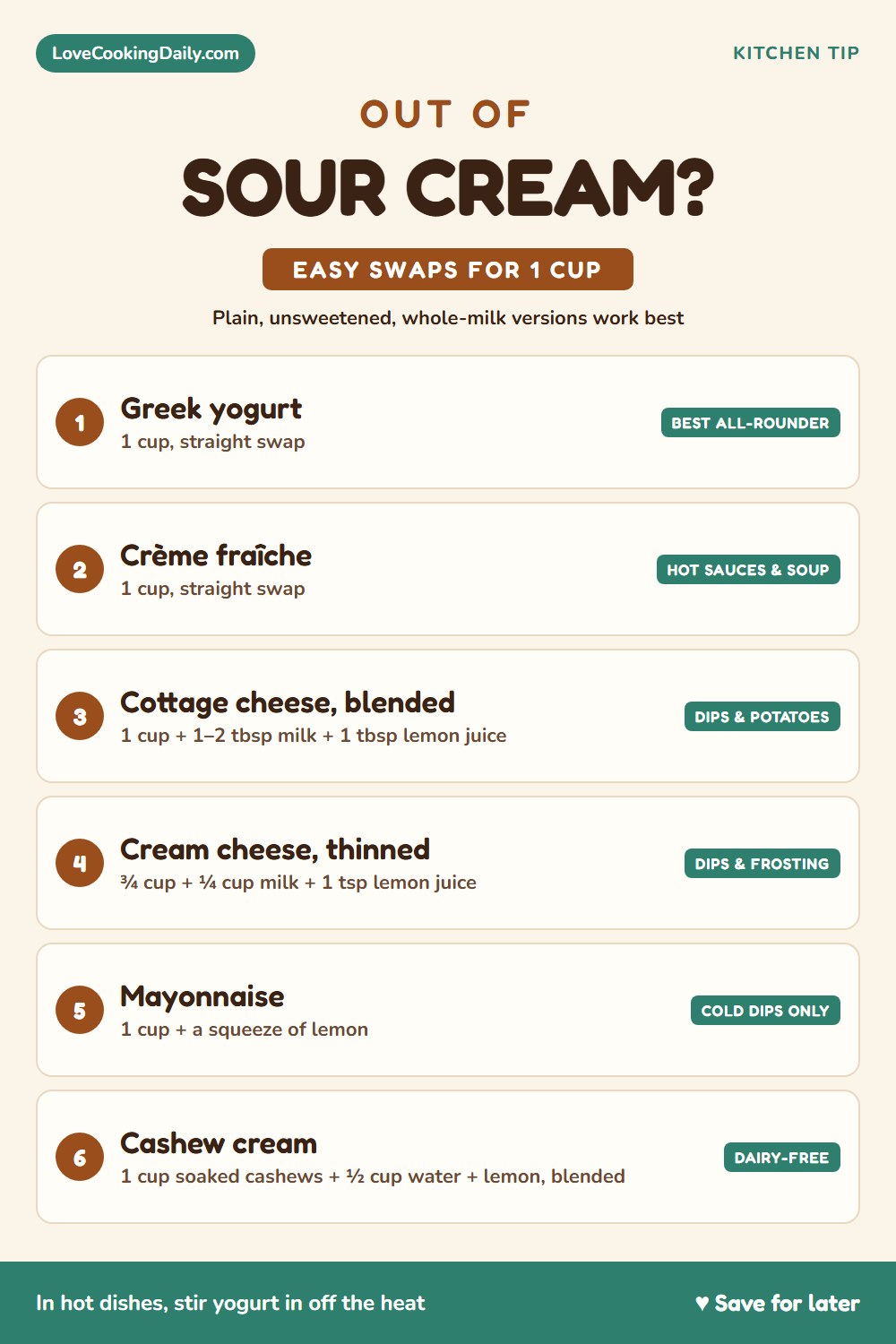
Sour cream substitute chart: what replaces 1 cup
Every amount below replaces 1 cup of sour cream. Halve it for half a cup. Need a smaller amount? Our guide to how many teaspoons are in a cup will help.
| Swap | Replaces 1 cup | Best in | Watch out for |
|---|---|---|---|
| Greek yogurt (plain, whole-milk) | 1 cup, straight swap | Dips, dressings, baking, toppings, mashed potatoes | Can split if it boils; stir it in off the heat |
| Plain yogurt (regular) | 1 cup, or strain it for 30 minutes first to thicken | Baking, marinades, dressings | Thinner, so dips come out runny unless strained |
| Crème fraîche | 1 cup, straight swap | Hot sauces, soups, stroganoff, toppings | Milder and richer; costs more |
| Cottage cheese, blended | 1 cup cottage cheese + 1–2 tbsp milk + 1 tbsp lemon juice, blended smooth | Dips, baked potatoes, casseroles | Must be blended or it stays lumpy |
| Cream cheese, thinned | ¾ cup softened cream cheese + ¼ cup milk + 1 tsp lemon juice, whisked | Dips, frostings, cheesecake-style bakes | Heavier; it firms up again when cold |
| Buttermilk | ¾ cup buttermilk, reducing other liquid a little | Dressings, pancakes, cakes | Far thinner; no good as a topping |
| Mayonnaise | 1 cup, straight swap | Cold dips and creamy dressings | No tang; add a squeeze of lemon. Not for baking or hot dishes |
| Heavy cream + lemon juice | 1 cup heavy cream + 1 tbsp lemon juice, rested 10 minutes | Soups, sauces, drizzling over chili or tacos | Pourable, not thick |
| Cashew cream (dairy-free) | 1 cup soaked raw cashews + ½ cup water + 1 tbsp lemon juice + 1 tsp vinegar + a pinch of salt, blended | Vegan dips, tacos, soups, baked potatoes | Needs a strong blender and a 2-hour soak (or 15 minutes in boiling water) |
What sour cream does in a recipe
Before you pick a swap, it helps to know which job sour cream is doing in your recipe. It usually does one or more of these:
- It adds tang. Sour cream is cultured, so it brings a gentle sourness that balances rich food. That’s why it sits on top of chili, nachos and baked potatoes.
- It adds body. It’s thick enough to hold a dip together and to make mashed potatoes and sauces feel creamy.
- It keeps bakes moist and tender. In cakes, muffins and quick breads, its fat and acid make a soft crumb. The acid also reacts with baking soda to help them rise.
The best swap is the one that covers the job your recipe needs. Greek yogurt covers all three, which is why it comes first.
The 9 sour cream swaps, explained
1. Greek yogurt (the best all-rounder)
Use plain, unsweetened, whole-milk Greek yogurt, cup for cup. It’s straining that makes Greek yogurt thick, so it holds up in dips just like sour cream, and it tastes almost the same. Low-fat Greek yogurt works too, but it’s tangier and a little chalkier, so add a spoonful of milk or a pinch of salt if it tastes sharp.
It’s also lighter. Plain whole-milk Greek yogurt has noticeably less fat than sour cream and far more protein, which is handy if you’re looking for a lighter topping.

2. Regular plain yogurt
Regular yogurt has the right flavor but is runnier. In baking, a marinade or a dressing, swap it straight in. For a dip or a topping, thicken it first: line a sieve with a coffee filter or paper towel, set it over a bowl, spoon in the yogurt and leave it in the fridge for 30 minutes to an hour. The longer it drains, the thicker it gets.
3. Crème fraîche
Crème fraîche is sour cream’s richer French cousin. It’s thicker, milder and higher in fat, and that extra fat is its superpower: it doesn’t curdle when it boils. Reach for it when the sour cream goes into something hot, such as a pan sauce, a stroganoff or a soup.
4. Blended cottage cheese
Put 1 cup of cottage cheese in a blender or food processor with 1 to 2 tablespoons of milk and 1 tablespoon of lemon juice, and blend until completely smooth. It’s high in protein and lower in fat, and once it’s blended you’d struggle to tell it apart from sour cream on a baked potato. Skip the blending and you’ll have lumps.
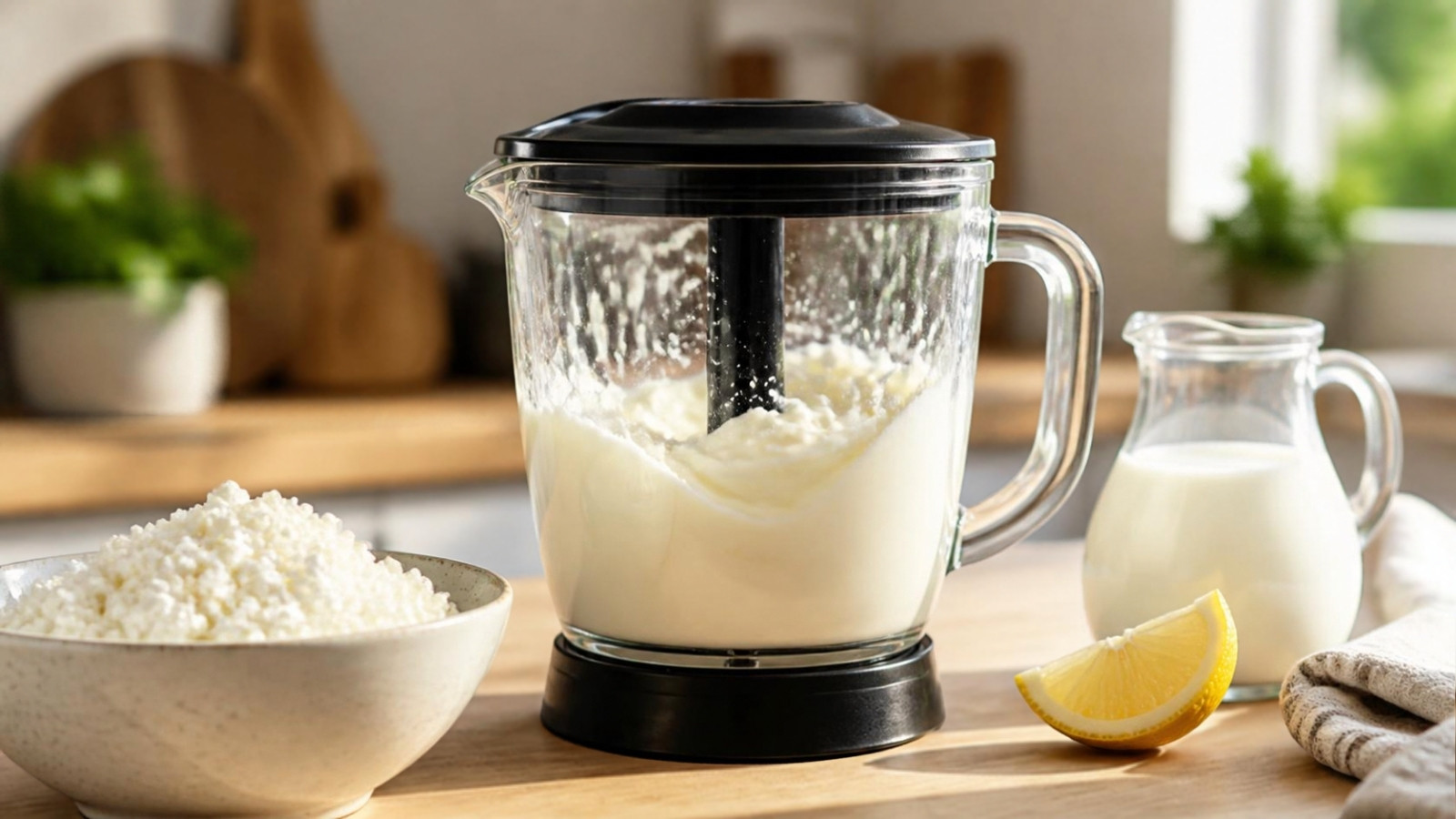
5. Cream cheese, thinned
Let ¾ cup of cream cheese soften at room temperature, then whisk in ¼ cup of milk and 1 teaspoon of lemon juice until smooth. It’s richer and denser than sour cream, which suits dips, cheesecake-style bars and frostings. Bear in mind it sets firm again in the fridge, so a cold dip made with it is thicker the next day.
6. Buttermilk
Buttermilk has the tang but not the thickness. Use about ¾ cup in place of 1 cup of sour cream, and cut back slightly on any other liquid in the recipe. It’s good in ranch dressing, pancakes and cakes. As a topping it’s no use at all. No buttermilk either? Here’s our buttermilk substitute guide.
7. Mayonnaise
For cold dips, potato salad and creamy dressings, mayonnaise swaps in cup for cup. It’s creamy but not tangy, so add a squeeze of lemon juice or a splash of vinegar. Don’t use it in baking or hot dishes: it’s an emulsion of oil and egg, and heat makes it split and turn greasy.
8. Heavy cream + lemon juice
Stir 1 tablespoon of lemon juice into 1 cup of heavy cream and let it sit for about 10 minutes. It thickens slightly and turns pleasantly tangy. It stays pourable, so think of it as a drizzle, not a dollop. It’s lovely swirled into soup or spooned over chili and tacos.
9. Dairy-free: cashew cream
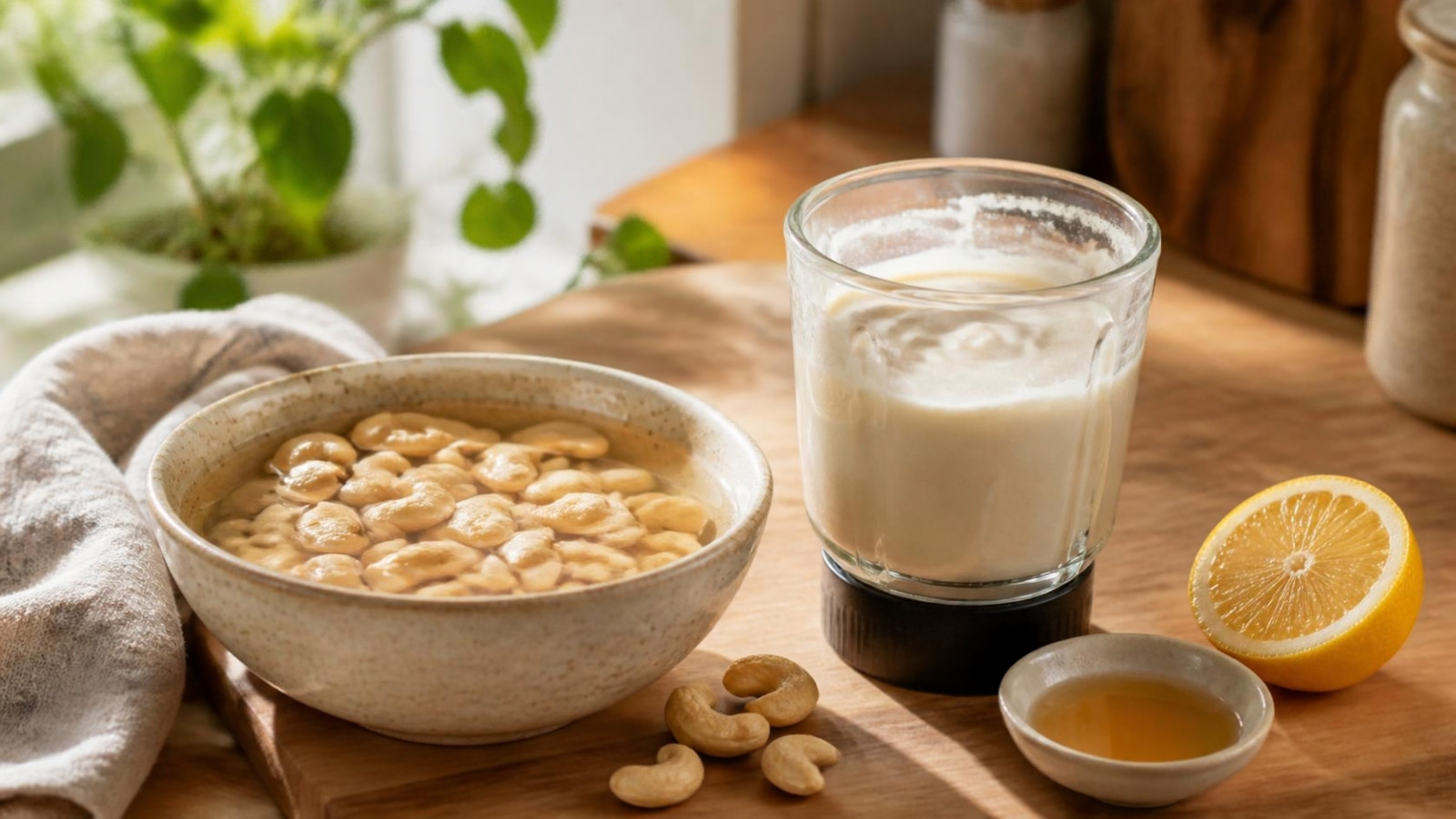
Soak 1 cup of raw, unsalted cashews in water for about 2 hours, or in just-boiled water for 15 minutes if you’re in a hurry. Drain them, then blend with ½ cup of fresh water, 1 tablespoon of lemon juice, 1 teaspoon of apple cider vinegar and a pinch of salt until silky. Add more water a spoonful at a time if it’s too thick. It keeps in the fridge for about 4 days.
No cashews? Chill a can of full-fat coconut milk overnight, scoop off the thick cream on top and stir in lemon juice to taste. It works well on curries and tacos, though it does taste a little of coconut.
Which swap to use, recipe by recipe
- Mashed potatoes: Greek yogurt, blended cottage cheese or cream cheese. Stir it in at the end, off the heat, with the butter. Use it in our garlic mashed potatoes with sour cream, or in extra-creamy mashed potatoes.
- Cakes, muffins and quick breads: Greek yogurt or regular plain yogurt, cup for cup. Both keep the crumb moist and react with baking soda the same way sour cream does.
- Dips: Greek yogurt, blended cottage cheese or thinned cream cheese. For a cold party dip, half Greek yogurt and half mayonnaise is rich and tangy.
- Soups, stews and pan sauces: crème fraîche, or Greek yogurt stirred in off the heat. Finish a roasted pumpkin soup with a swirl of crème fraîche or the heavy cream and lemon mix.
- Casseroles: Greek yogurt or blended cottage cheese, mixed with the other ingredients before baking, works in dishes like a sour cream noodle bake or a chicken enchilada casserole. Once it’s surrounded by noodles, cheese or sauce, it’s protected from curdling.
- Tacos, nachos, chili and baked potatoes: Greek yogurt for a dollop, or heavy cream with lemon for a drizzle. Cashew cream is the dairy-free pick.
- Beef stroganoff: crème fraîche, because it won’t split in the hot sauce. If you use Greek yogurt, take the pan off the heat first.
- Dairy-free or vegan cooking: cashew cream, or chilled coconut cream with lemon. If the recipe also uses eggs, here’s what to use instead of eggs.
Cooking with a substitute in something hot
The swap that most often goes wrong is yogurt in a hot sauce. Yogurt has less fat than sour cream, so boiling makes its proteins clump and the sauce looks grainy. Three habits stop it from happening:
- Take the pan off the heat before you add the yogurt.
- Temper it. Stir a couple of spoonfuls of the hot sauce into the yogurt first, then stir that back into the pan.
- Use full-fat. Whole-milk yogurt is much less likely to split than low-fat or fat-free.
A teaspoon of flour or cornstarch whisked into the yogurt before it goes in also helps it hold. Or skip the worry and use crème fraîche, which can boil happily.
Mistakes to avoid
- Using flavored or sweetened yogurt. Vanilla yogurt on a baked potato is a surprise nobody wants. Check that the tub says plain and unsweetened.
- Boiling yogurt in a sauce. Add it off the heat, as above.
- Using regular yogurt in a dip without draining it. The dip will be runny by the time it reaches the table. Strain it first, or use Greek yogurt.
- Baking with mayonnaise. It’s fine in a cold dip but not in a cake or a casserole.
- Skipping the blender for cottage cheese. Whisking it won’t get rid of the curds.
Quick questions
Can I use Greek yogurt instead of sour cream?
Yes. Plain whole-milk Greek yogurt is the closest swap, cup for cup, in dips, dressings, baking and toppings. The only care it needs is in hot dishes: stir it in off the heat so it doesn’t split.
Can I use mayonnaise instead of sour cream?
In cold dips, dressings and salads, yes, cup for cup, with a squeeze of lemon for tang. Don’t bake with it or stir it into a hot sauce.
What’s the best sour cream substitute for baking?
Plain Greek yogurt or regular plain yogurt, cup for cup. They bring the same moisture and acidity, so cakes and muffins rise and stay tender just as they would with sour cream.
Is crème fraîche the same as sour cream?
Not quite. Both are cultured cream, but crème fraîche has more fat and a milder, nuttier taste. That extra fat is why it doesn’t curdle when it boils, so it’s the better choice for hot sauces and soups.
What can I use instead of sour cream if I’m dairy-free?
Cashew cream: soaked raw cashews blended with water, lemon juice, a little vinegar and salt. Chilled coconut cream with lemon juice works too, with a light coconut flavor.
Kitchen Kit
- A fine-mesh strainer, for thickening regular yogurt into a dip-ready swap
- A small blender, for smooth cottage cheese and cashew cream
- Measuring cups and spoons
As an Amazon Associate I earn from qualifying purchases.