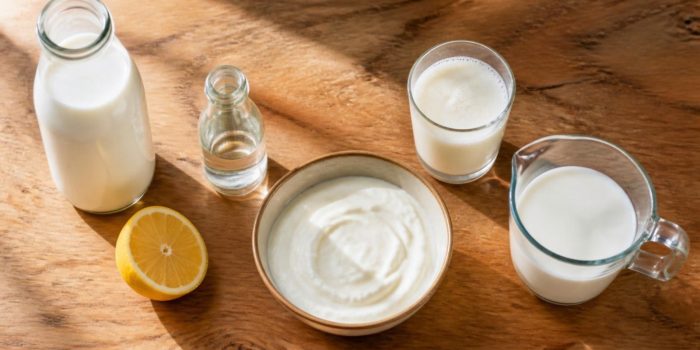
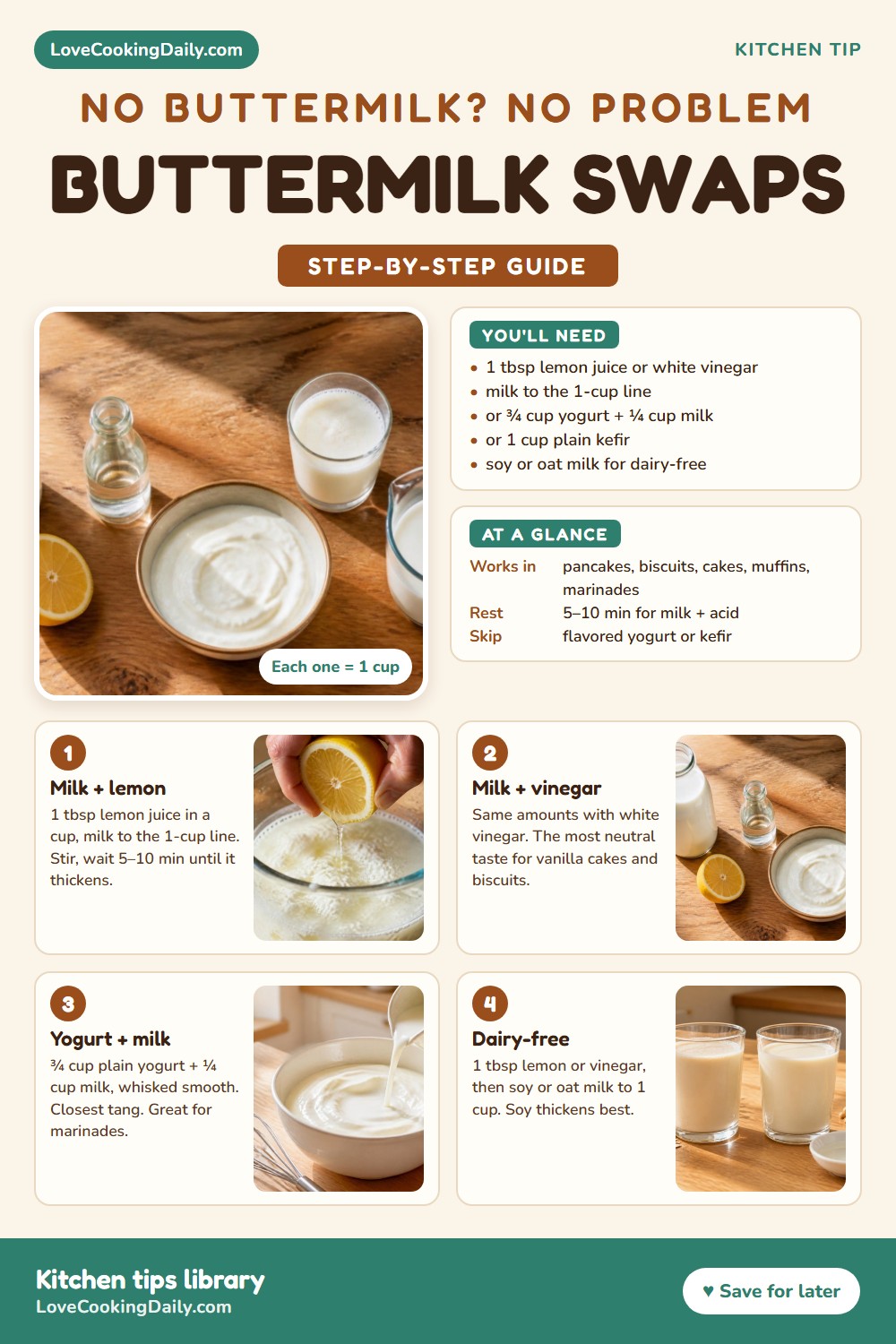
Short answer: to replace 1 cup of buttermilk, put 1 tablespoon of lemon juice or white vinegar in a measuring cup, top it up to the 1-cup line with milk, stir, and let it sit for 5 to 10 minutes until it thickens slightly. Plain yogurt or kefir work just as well, and there’s a swap for dairy-free kitchens too.
Below you’ll find a quick chart, then each swap explained, then which one to use in pancakes, biscuits, cakes and fried chicken.
On this page: The chart · What buttermilk does in a recipe · The 7 swaps · Recipe by recipe · Mistakes to avoid · Quick questions
Buttermilk substitute chart: what replaces 1 cup
Every amount below makes 1 cup of buttermilk substitute. Halve it for half a cup. Short on measuring spoons? Our guide to how many teaspoons are in a cup will help.
| Swap | Makes 1 cup | Best in | Watch out for |
|---|---|---|---|
| Milk + lemon juice | 1 tbsp lemon juice, then milk to the 1-cup line. Rest 5–10 minutes | Pancakes, waffles, muffins, cakes, biscuits | A faint lemon note in very plain bakes |
| Milk + white vinegar | 1 tbsp white vinegar, then milk to the 1-cup line. Rest 5–10 minutes | Everything lemon juice works in; the most neutral taste | Use plain white or cider vinegar, not balsamic |
| Plain yogurt + milk | ¾ cup plain yogurt + ¼ cup milk, whisked smooth | Cakes, quick breads, marinades, dressings | Sweetened or flavored yogurt |
| Sour cream + milk | ¾ cup sour cream + ¼ cup milk, whisked smooth | Biscuits, scones, coffee cake, dips | It’s richer, so bakes come out a little heavier |
| Kefir | 1 cup plain kefir, straight swap | Pancakes, muffins, marinades, ranch dressing | Flavored kefir |
| Milk + cream of tartar | 1¾ tsp cream of tartar + 1 cup milk | Baking, when you have no lemon or vinegar | It clumps; mix it into 2 tbsp of the milk first |
| Non-dairy milk + acid | 1 tbsp lemon juice or vinegar, then soy or oat milk to the 1-cup line | Dairy-free pancakes, muffins and cakes | Almond and rice milk barely thicken |
What buttermilk does in a recipe
Before you pick a swap, it helps to know why the recipe asked for buttermilk in the first place. It usually does one or more of three jobs:
- It makes things rise. Buttermilk is acidic. When a recipe pairs it with baking soda, the two react and make the bubbles that lift pancakes, biscuits and soda bread. Plain milk isn’t acidic, so a straight swap leaves the bake flatter and can taste faintly soapy.
- It keeps things tender. The acid softens gluten in baking, and in a marinade it helps tenderize chicken.
- It adds tang. That gentle sourness is the flavor of buttermilk pancakes, ranch dressing and a good buttermilk cake.
Every swap on this page brings back the acid, which is the important part. Some also bring back the thickness and the tang.
The 7 buttermilk swaps, explained
1. Milk + lemon juice (the classic)
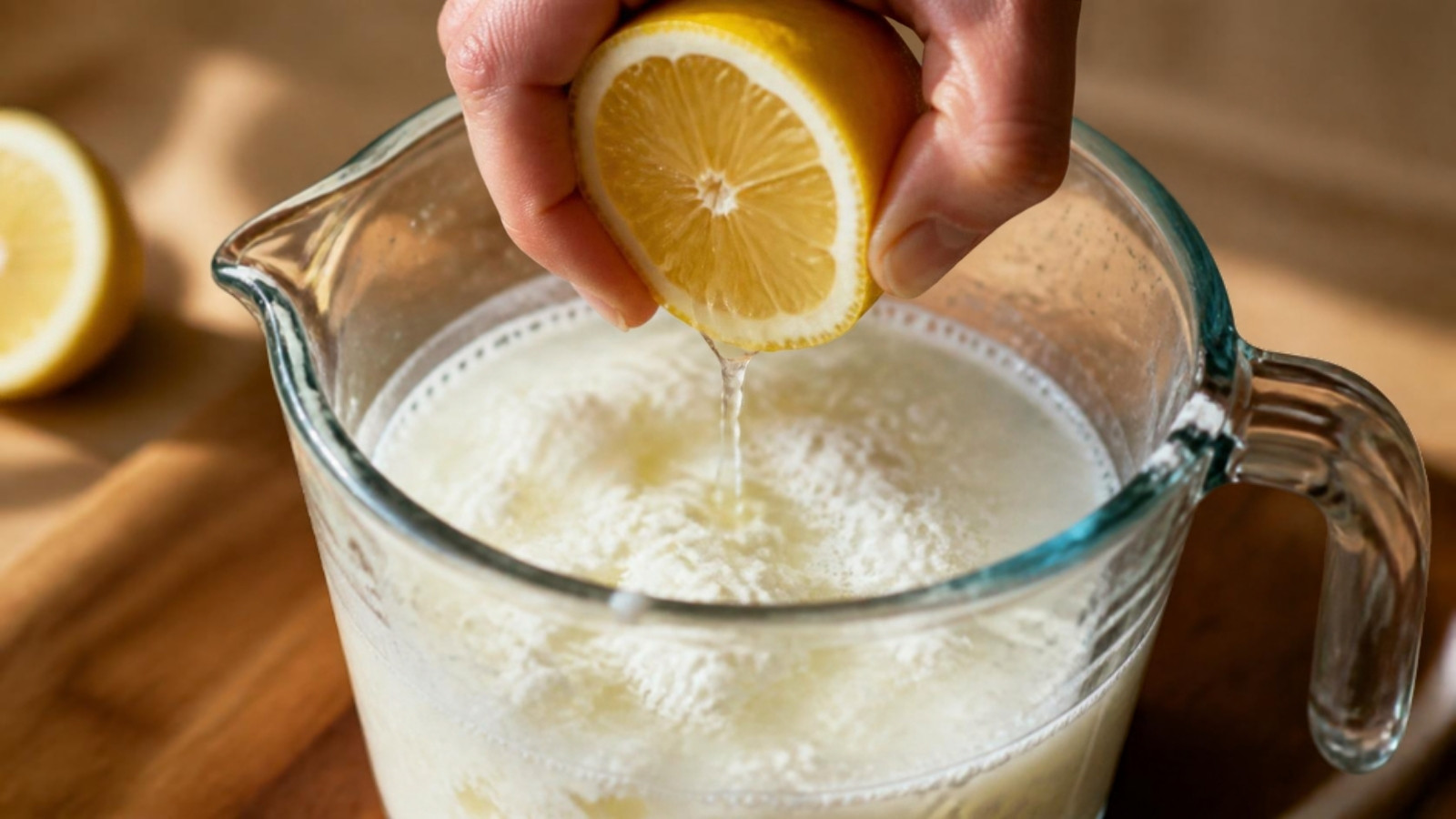
Put 1 tablespoon of lemon juice in a liquid measuring cup, pour milk in up to the 1-cup line, stir, and leave it for 5 to 10 minutes. It thickens a little and you may see small flecks. That’s what you want, and it’s exactly how it should look.
Whole milk gives the closest result. Low-fat milk works but stays thinner. Bottled lemon juice is fine here.
2. Milk + white vinegar
Same method and same amounts as lemon juice: 1 tablespoon of vinegar, then milk to the 1-cup line, then a 5 to 10 minute rest. White vinegar is the most neutral choice, so it’s the one to use in vanilla cakes and plain biscuits. Apple cider vinegar works too and adds a very slight fruity note.
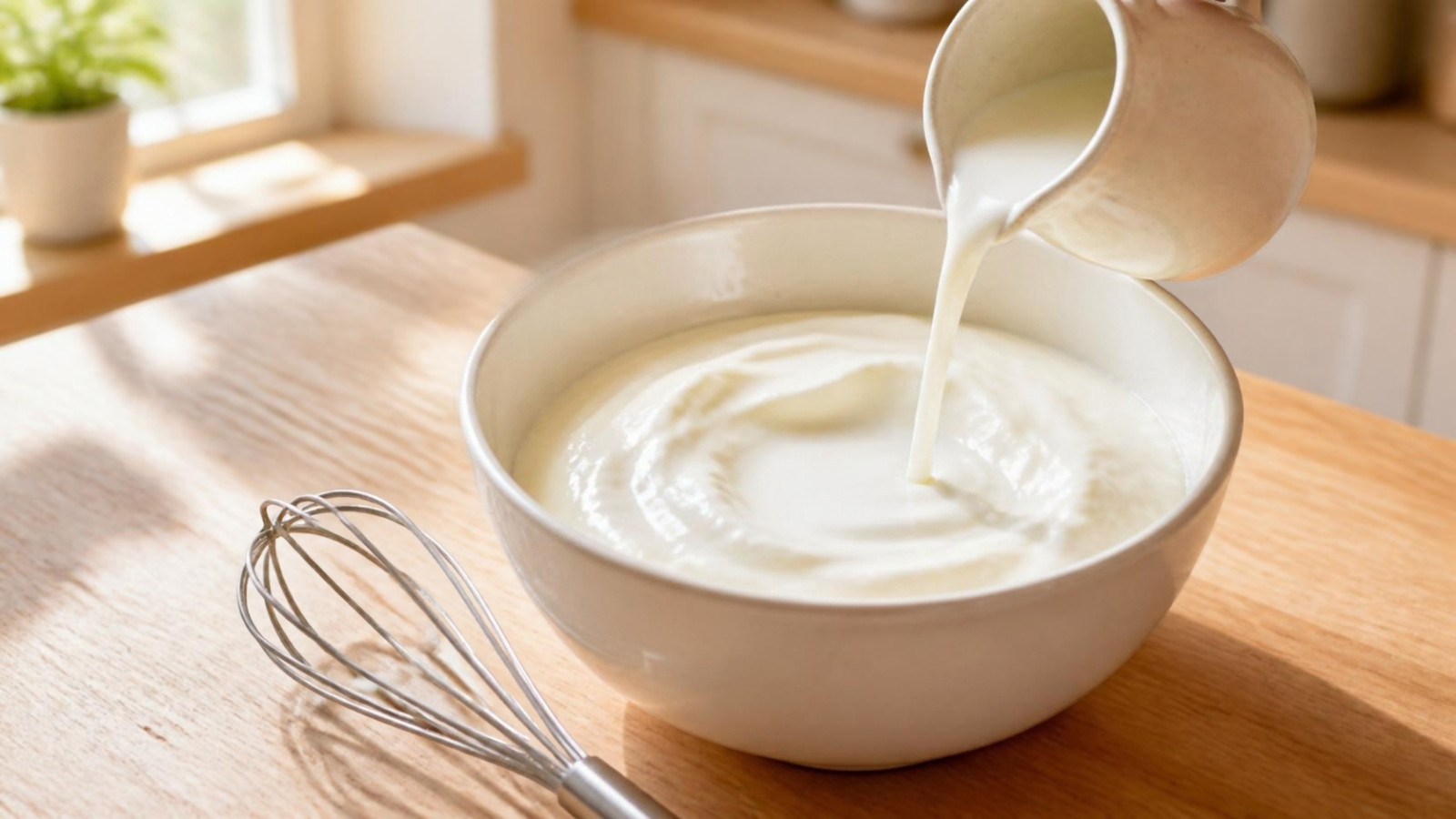
3. Plain yogurt thinned with milk
Whisk ¾ cup of plain yogurt with ¼ cup of milk until smooth. This is the swap that tastes most like real buttermilk, because yogurt is already cultured and tangy. If you’re using thick Greek yogurt, add a little more milk to get it pourable.
4. Sour cream thinned with milk
Whisk ¾ cup of sour cream with ¼ cup of milk. It’s richer than buttermilk, which suits biscuits, scones and coffee cake well. In a light, fluffy cake it can make the crumb a touch heavier.
5. Kefir
Plain kefir is a cultured, drinkable milk that is already thin and tangy, so it swaps in cup for cup with no mixing at all. If you keep it in the fridge, it’s the easiest buttermilk substitute there is.
6. Milk + cream of tartar
No lemon and no vinegar? Cream of tartar from the baking shelf is an acid too. Use 1¾ teaspoons for each cup of milk. Stir it into 2 tablespoons of the milk first, then add the rest, because it clumps if you drop it straight into a full cup. This one is for baking, not for dressings.
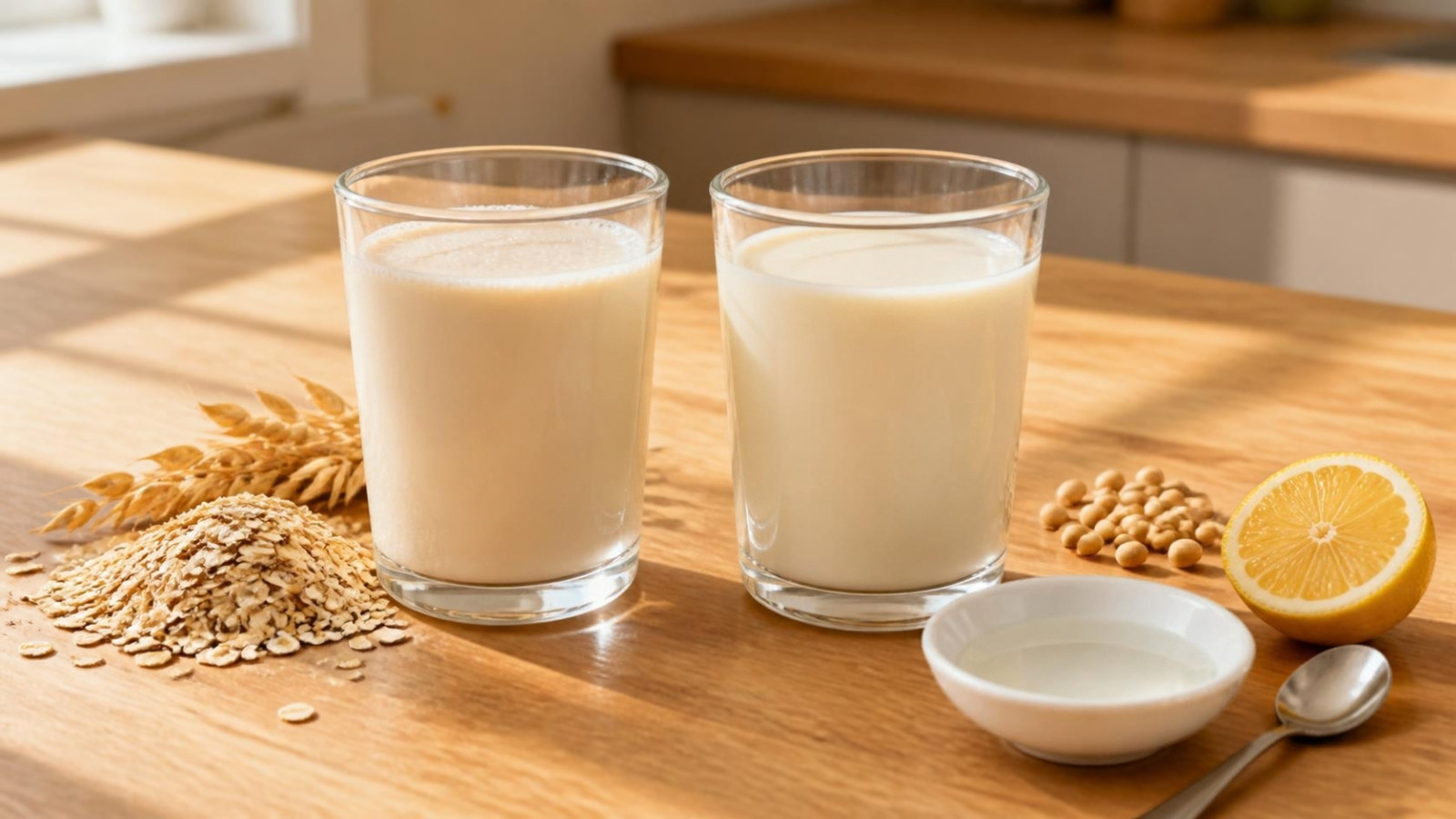
7. Dairy-free: soy or oat milk + acid
Add 1 tablespoon of lemon juice or vinegar to a measuring cup and top it up with unsweetened soy or oat milk. Soy milk thickens best, because of its protein. Almond and rice milk give you the acid but barely thicken, which is fine in pancakes and less good in biscuits.
What about powdered buttermilk? If you have a tub of dried buttermilk powder, mix it with water following the directions on the tub, or add the powder to the dry ingredients and the water to the wet. It keeps for months, which makes it handy if you only bake with buttermilk now and then.
Which swap to use, recipe by recipe
- Pancakes and waffles: milk with lemon juice or vinegar, or kefir. All three give fluffy, tender pancakes. Try it in our vanilla cinnamon buttermilk pancakes.
- Biscuits and scones: sour cream or yogurt thinned with milk. The extra thickness keeps the dough easy to handle.
- Cakes and cupcakes: milk with white vinegar for a neutral taste, or yogurt and milk for extra moistness. It works nicely in an old-fashioned chocolate buttermilk cake.
- Muffins and quick breads: any swap on the list.
- Fried chicken marinade: yogurt thinned with milk, or kefir. They cling to the chicken best, which helps the coating stick. Then get frying with our fried chicken recipe.
- Ranch and creamy dressings: yogurt and milk, or kefir, for the tang. Skip cream of tartar here.
- Dairy-free or vegan baking: soy milk with lemon juice or vinegar. If the recipe also uses eggs, here’s what to use instead of eggs.
Mistakes to avoid
- Adding a full cup of milk to the acid. Put the acid in first, then fill to the 1-cup line. Otherwise you end up with more liquid than the recipe wants.
- Skipping the rest. Give the milk and acid their 5 to 10 minutes. It needs that time to thicken.
- Using plain milk with no acid in a recipe with baking soda. The soda has nothing to react with, so the bake rises less and can taste soapy.
- Reaching for flavored yogurt or kefir. Vanilla or fruit flavors and added sugar will show up in the finished dish.
- Expecting it to be identical. A homemade swap is a little thinner than store-bought buttermilk. In baking you won’t notice. In a dressing, the yogurt or kefir versions get closest.
Quick questions
How long does milk and vinegar take to become buttermilk?
About 5 to 10 minutes at room temperature. It thickens slightly and may look a little curdled. Give it a stir and use it.
Can I use regular milk instead of buttermilk?
Only if you add an acid to it. Plain milk on its own leaves out the acid that buttermilk recipes count on, so pancakes and biscuits come out flatter. One tablespoon of lemon juice or vinegar per cup fixes it.
Can I make a buttermilk substitute with lactose-free milk?
Yes. Lactose-free cow’s milk behaves like regular milk here, so use the lemon juice or vinegar method exactly the same way.
Which buttermilk substitute is closest to the real thing?
Plain kefir, or plain yogurt thinned with milk. Both are cultured like buttermilk, so they have the same tang and thickness. Milk with lemon juice or vinegar is the quickest, and in baking the result is just as good.
Kitchen Kit
- A glass liquid measuring cup, so you can fill right to the 1-cup line
- Measuring cups and spoons
- A handheld citrus squeezer, for fresh lemon juice without the seeds
As an Amazon Associate I earn from qualifying purchases.